T.R.M. (Thyroidman Clinic) Bangkok,Thailand

Thyroid treatment services

All types of thyroid and parathyroid surgery

by Dr. Thanyawat, Endocrine surgery (Thyroid and Parathyroid)

Transoral endoscopic thyroid surgery

Incisionless Neck Innovations for Complete Confidence

In the past, when someone needed surgery for a thyroid tumor, an inevitable byproduct was a long horizontal scar across the center of the neck. This scar often left many patients—especially women—feeling anxious and self-conscious, forcing them to constantly hide it behind turtlenecks or scarves.

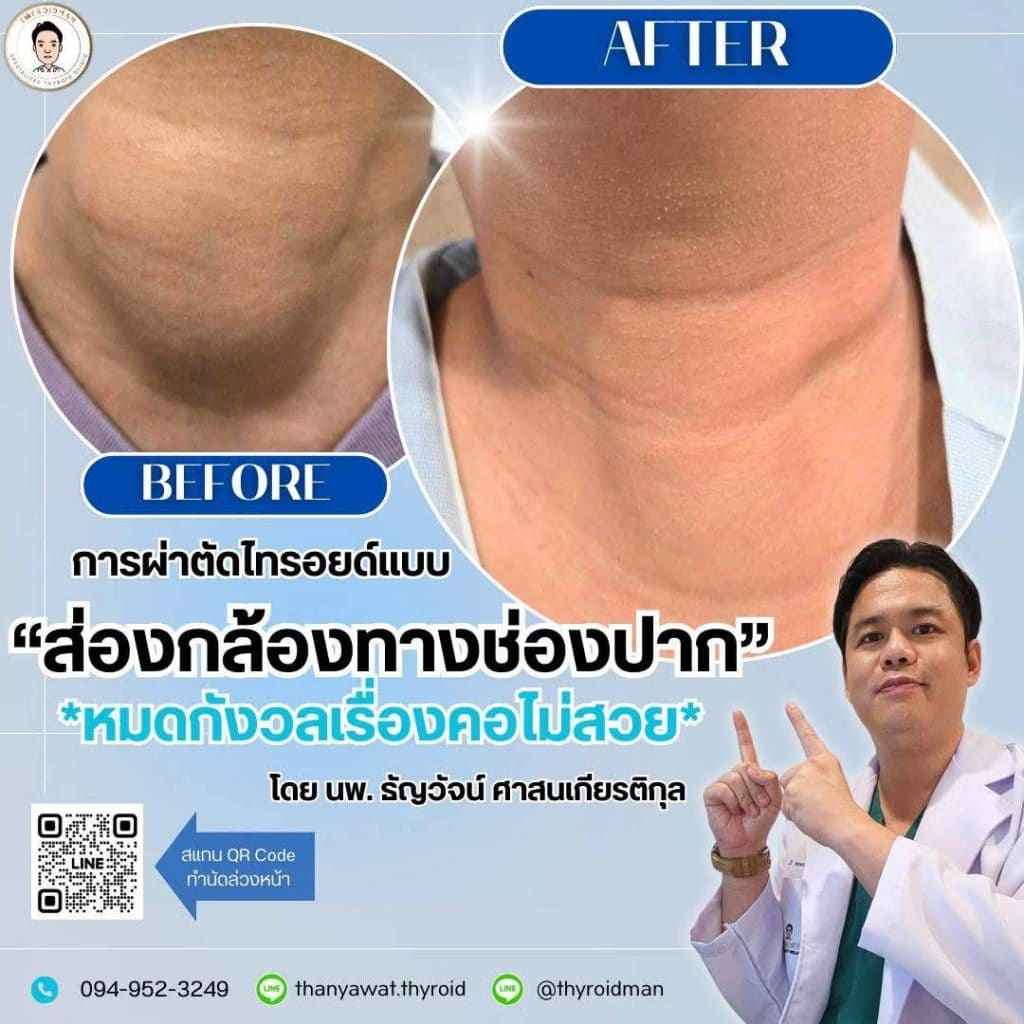
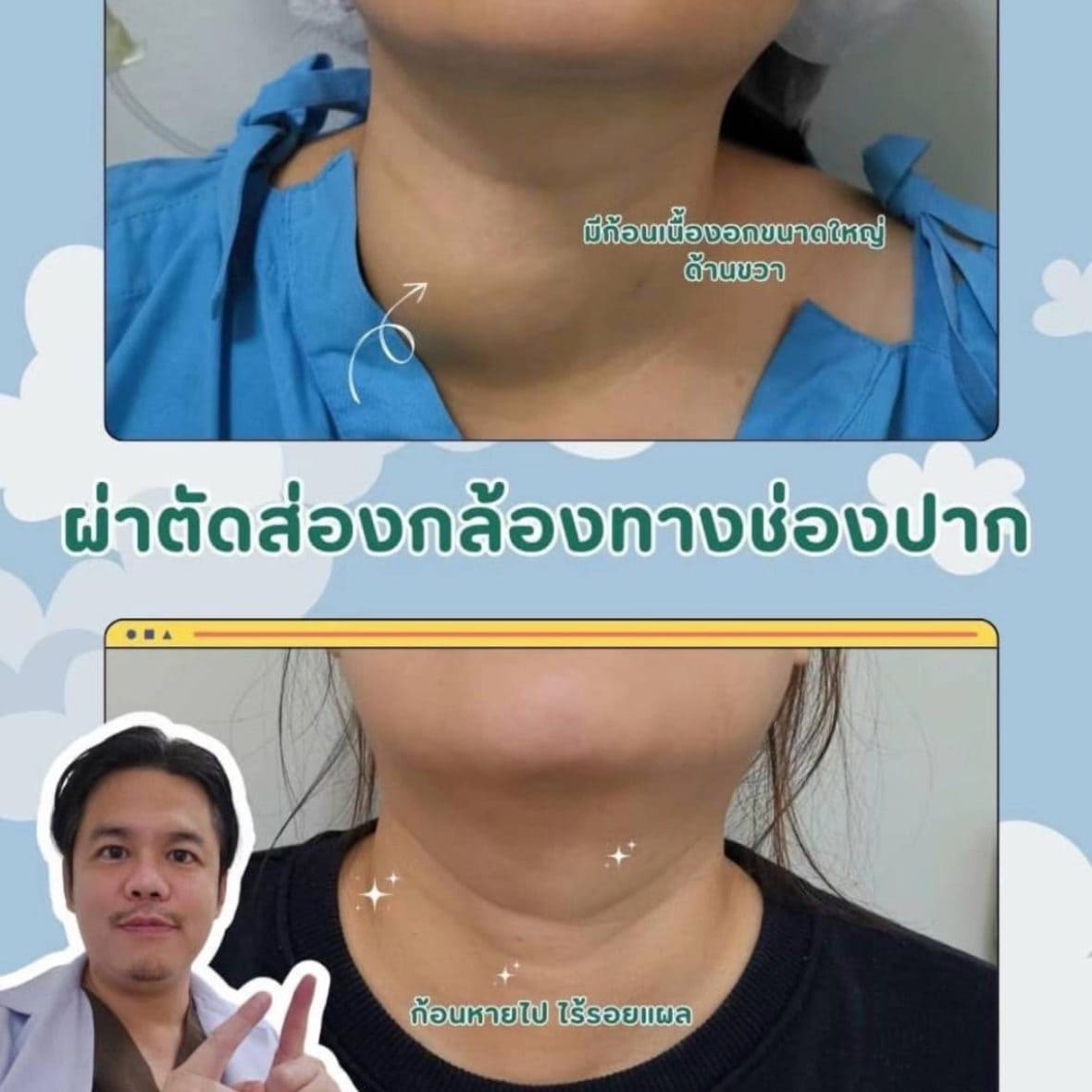
However, due to rapid advancements in medical technology, we now have a method called Transoral Endoscopic Thyroidectomy Vestibular Approach (TOETVA)—or endoscopic thyroid removal through the mouth. This game-changing innovation allows patients to safely treat thyroid tumors with “no visible external scars remaining on the body.”

This article will take everyone through a simple, easy-to-understand breakdown of this surgical innovation: how it is performed, its benefits, and who is an ideal candidate.

What is Transoral Endoscopic Thyroidectomy?

To explain it as simply as possible: instead of using a scalpel to cut directly through the skin on the outside of the neck, this method takes an alternative route. Extremely small surgical instruments and a camera are inserted through the inside of the **lower lip** in the oral cavity, traveling beneath the skin down to the thyroid gland located in the neck.

Because the oral mucosa heals very rapidly and all surgical incisions remain completely hidden inside the lower lip, once healed, absolutely no scars appear on the outer skin of the neck.

Superior Advantages of Hidden-Scar Thyroid Surgery

Why has transoral endoscopic thyroid surgery gained immense popularity today? It is because this technique offers several key benefits that cater directly to modern patients:

  • Zero External Scars (No External Scar):
    This is the primary advantage. All incisions are hidden entirely inside the mouth, leaving the outer neck skin as smooth and pristine as it was before surgery.
  • Less Pain, Faster Recovery:
    Because endoscopic surgery is a minimally invasive procedure, tissue trauma is significantly minimized. Patients experience less postoperative pain and can return to their daily routines much faster.
  • Shortest Distance and Dual-Lobe Access:
    The oral cavity is located very close to the thyroid gland, allowing for direct and easy access. Crucially, both the left and right lobes of the thyroid can be removed through this single oral route without needing additional incisions.
  • Enhanced Visualization of Critical Nerves and Parathyroid Glands:
    Modern surgical endoscopes feature high-definition clarity and multi-fold magnification. This enables surgeons to clearly visualize the recurrent laryngeal nerves and parathyroid glands in high detail, effectively reducing the risk of postoperative hoarseness.

Who is Eligible for This Surgical Procedure?

Despite the numerous advantages of transoral endoscopic surgery, not every patient with a thyroid tumor is a suitable candidate. A thorough evaluation by a physician is required.

Initial eligibility criteria generally include:

1. Size of the nodule:
The solid tumor or cyst should not be excessively large (typically recommended to be no larger than 6 centimeters). If the tumor is too large, it cannot be safely extracted through the small opening in the mouth.

2. Type of nodule:
This method is suitable for benign tumors or early-stage thyroid cancer where the tumor remains small and has not extensively spread to the neck lymph nodes.

3. Absence of Oral Infections:
Gums and teeth must be healthy, with no severe active oral inflammation or ulcers at the time of surgery.

Surgical Procedure: What Happens in the Operating Room?

Once your doctor determines that you are a suitable candidate for transoral endoscopic thyroidectomy, the steps on the day of surgery are as follows:

  • Anesthesia:
    The patient is placed under general anesthesia by an anesthesiologist, just like in any major surgery.
  • Creating the Oral Access:
    The oral cavity is thoroughly sanitized. Next, three small incisions are made in the groove between the gums and the lower lip: a central incision of about 1 centimeter for the endoscope, and two lateral incisions of merely 0.5 centimeters each for the surgical instruments.
  • Dissection and Tumor Removal:
    Carbon dioxide gas is gently used to create a working space beneath the skin. The surgeon then uses specialized instruments to carefully dissect the thyroid gland away from surrounding tissues. Once severed, the tumor is placed inside a sterile extraction bag and pulled out through the mouth.
  • Wound Closure:
    The doctor sews the incisions inside the mouth closed using absorbable sutures, which dissolve naturally on their own. As a result, patients do not need to return for suture removal later on.

Preparing and Caring for Yourself After Surgery

Self-care for transoral endoscopic thyroid surgery requires a special emphasis on oral hygiene.

Pre-Operative Preparation:

In addition to undergoing a physical checkup, fasting from food and water for 6–8 hours, and discontinuing blood thinners as prescribed by your doctor, patients should **address any dental issues**—such as undergoing dental scaling or treating cavities—prior to the day of surgery to minimize bacterial load in the oral cavity.

Hospital and Home Recovery

  • Oral Wound Care:
    During the first 3–5 days, you must rinse your mouth with sterile saline or a prescribed antiseptic mouthwash after every meal. This maintains cleanliness and prevents food particles from clinging to the sutures.
  • Dietary Choices:
    Soft, bland foods served cold or at room temperature—such as cooled rice porridge, milk, ice cream, or pudding—are recommended. Cold temperatures effectively help reduce oral swelling and pain. Avoid hot, spicy, or hard foods that require vigorous chewing.
  • Temporary Side Effects:
    You may experience temporary swelling or bruising beneath the chin, as well as numbness around the lower lip and chin caused by tissue stretching during the procedure. This numbness will gradually subside and resolve completely within 6–8 months.
  • Neck Tightness:
    Even without external incisions, internal tissue repair occurs. You may feel a sensation of tightness in your neck. Practice gentle neck movements, avoid strenuous activities as advised by your doctor, and perform gentle neck massages after surgery.

Summary

Treating thyroid tumors with transoral endoscopic thyroidectomy (TOETVA) is an excellent alternative for individuals who need thyroid surgery but are concerned about visible scarring. This method delivers treatment outcomes that are as safe and effective as traditional open neck surgery, while offering significantly superior aesthetic results.

However, every individual’s anatomy is unique, and each tumor exhibits distinct characteristics. If you or someone close to you is diagnosed with a thyroid tumor, consulting with a specialized surgeon for a thorough assessment is highly recommended to determine whether your body and tumor profile are suitable for transoral endoscopic surgery, ensuring targeted treatment and optimal results.