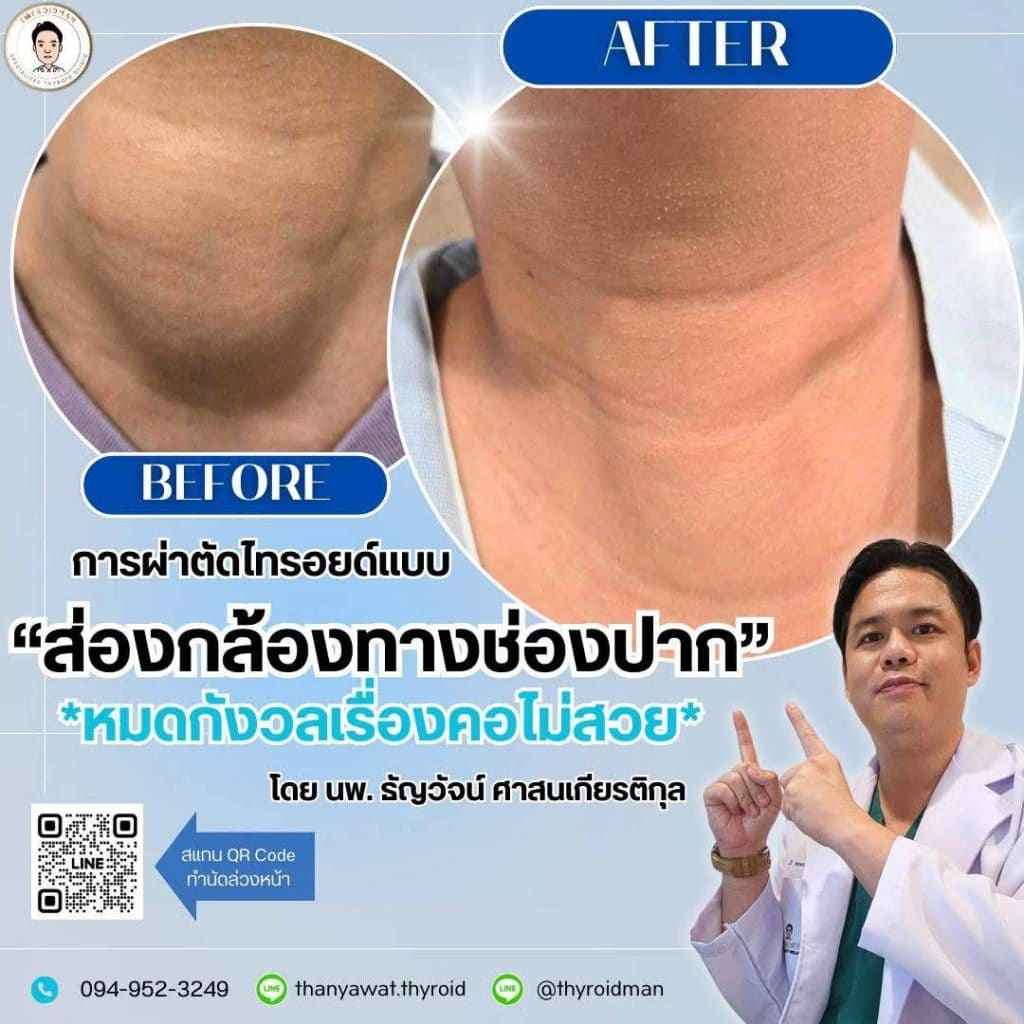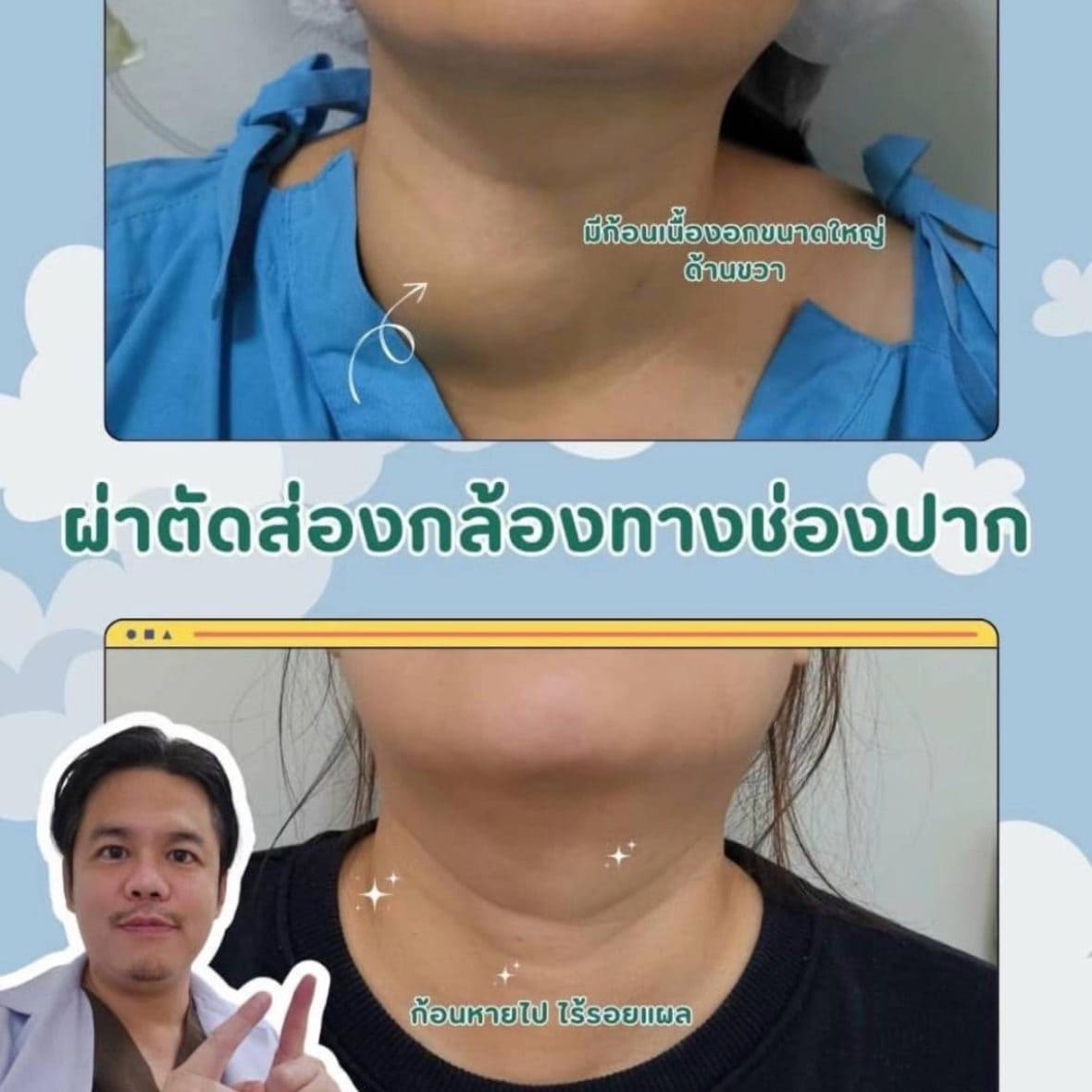
In the past, when someone needed surgery for a thyroid tumor, an inevitable byproduct was a long horizontal scar across the center of the neck. This scar often left many patients—especially women—feeling anxious and self-conscious, forcing them to constantly hide it behind turtlenecks or scarves.
However, due to rapid advancements in medical technology, we now have a method called Transoral Endoscopic Thyroidectomy Vestibular Approach (TOETVA)—or endoscopic thyroid removal through the mouth. This game-changing innovation allows patients to safely treat thyroid tumors with “no visible external scars remaining on the body.”
This article will take everyone through a simple, easy-to-understand breakdown of this surgical innovation: how it is performed, its benefits, and who is an ideal candidate.
To explain it as simply as possible: instead of using a scalpel to cut directly through the skin on the outside of the neck, this method takes an alternative route. Extremely small surgical instruments and a camera are inserted through the inside of the **lower lip** in the oral cavity, traveling beneath the skin down to the thyroid gland located in the neck.
Because the oral mucosa heals very rapidly and all surgical incisions remain completely hidden inside the lower lip, once healed, absolutely no scars appear on the outer skin of the neck.
Why has transoral endoscopic thyroid surgery gained immense popularity today? It is because this technique offers several key benefits that cater directly to modern patients:
Despite the numerous advantages of transoral endoscopic surgery, not every patient with a thyroid tumor is a suitable candidate. A thorough evaluation by a physician is required.
Initial eligibility criteria generally include:
1. Size of the nodule:
The solid tumor or cyst should not be excessively large (typically recommended to be no larger than 6 centimeters). If the tumor is too large, it cannot be safely extracted through the small opening in the mouth.
2. Type of nodule:
This method is suitable for benign tumors or early-stage thyroid cancer where the tumor remains small and has not extensively spread to the neck lymph nodes.
3. Absence of Oral Infections:
Gums and teeth must be healthy, with no severe active oral inflammation or ulcers at the time of surgery.
Once your doctor determines that you are a suitable candidate for transoral endoscopic thyroidectomy, the steps on the day of surgery are as follows:
Self-care for transoral endoscopic thyroid surgery requires a special emphasis on oral hygiene.
In addition to undergoing a physical checkup, fasting from food and water for 6–8 hours, and discontinuing blood thinners as prescribed by your doctor, patients should **address any dental issues**—such as undergoing dental scaling or treating cavities—prior to the day of surgery to minimize bacterial load in the oral cavity.
Treating thyroid tumors with transoral endoscopic thyroidectomy (TOETVA) is an excellent alternative for individuals who need thyroid surgery but are concerned about visible scarring. This method delivers treatment outcomes that are as safe and effective as traditional open neck surgery, while offering significantly superior aesthetic results.
However, every individual’s anatomy is unique, and each tumor exhibits distinct characteristics. If you or someone close to you is diagnosed with a thyroid tumor, consulting with a specialized surgeon for a thorough assessment is highly recommended to determine whether your body and tumor profile are suitable for transoral endoscopic surgery, ensuring targeted treatment and optimal results.